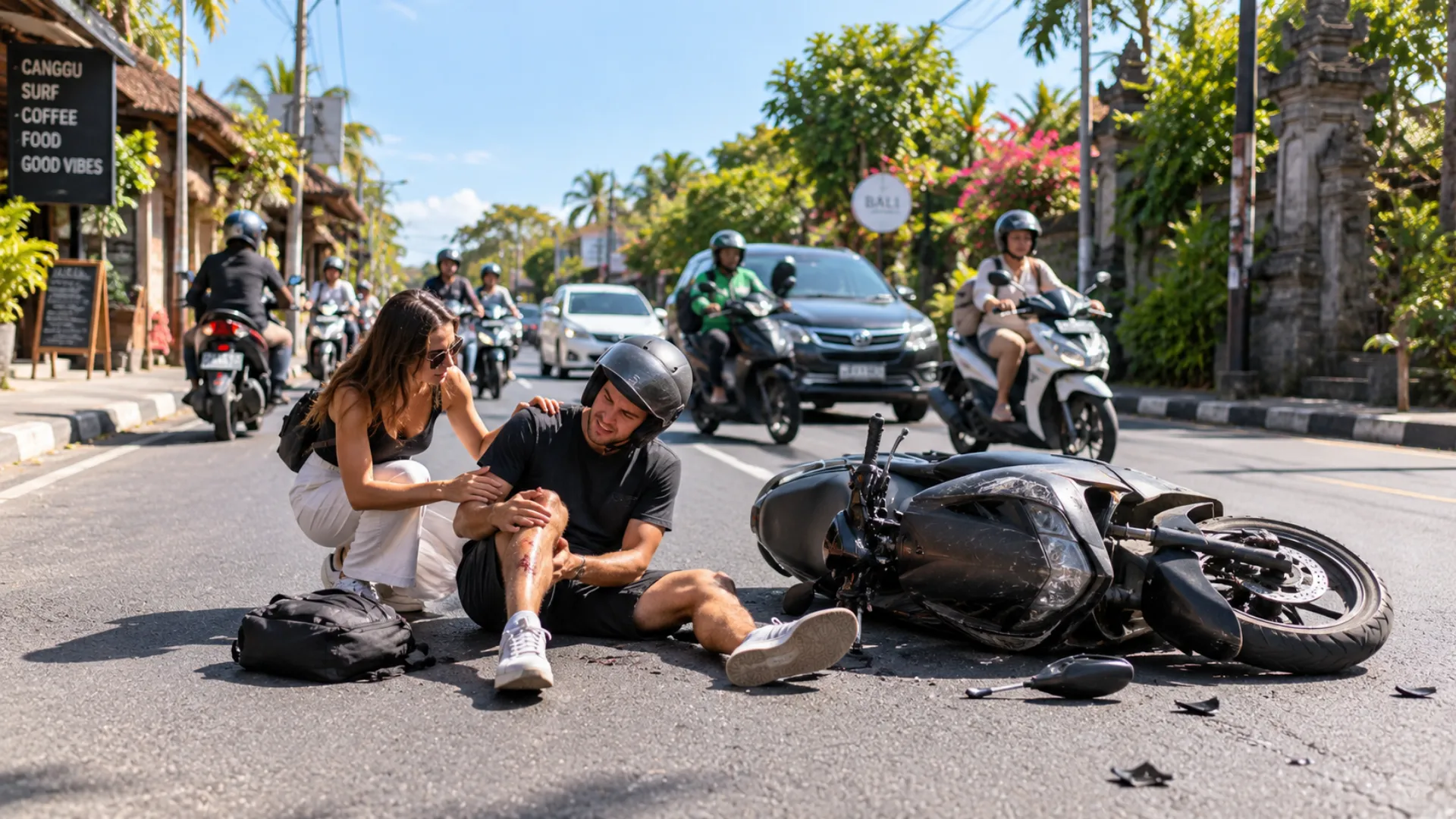
Scooter Accident in Bali: Where to Get Medical Help and What to Expect

Riding a scooter in Bali is one of the most common ways to get around the island. It is also one of the most common ways to end up at a clinic. Bali's roads are busy, uneven, and unpredictable, and even experienced riders get caught out by sudden rain, loose gravel, or traffic that behaves differently from what they are used to at home.
If you or someone in your group has been in a scooter accident, this guide covers exactly what to do, where to go, and what to expect from medical care in Bali.
The Most Common Injuries from Scooter Accidents in Bali
Road rash is by far the most frequent injury seen at clinics across Bali after a scooter accident. Even a low-speed fall at 20 to 30 kilometers per hour can produce significant skin abrasion across the arms, legs, hands, and knees. In a tropical environment, road rash carries a high infection risk because the wound is exposed to road debris, dirt, and bacteria in the heat and humidity.
Lacerations and cuts are common, particularly on the hands, knees, and face. These may require cleaning, closure with sutures or skin staples, and a course of antibiotics depending on the depth and contamination of the wound.
Fractures and sprains, particularly of the wrist and ankle, occur frequently when riders instinctively brace for impact. Suspected fractures require imaging to confirm.
Head injuries are a serious risk, particularly for riders not wearing a helmet. Any loss of consciousness, confusion, severe headache, vomiting, or visual disturbance after a head impact requires emergency assessment without delay.
What to Do Immediately After a Scooter Accident
Stay calm and check for serious injuries first. Before moving, assess yourself or the injured person for severe bleeding, deformity of a limb, difficulty breathing, or altered consciousness. If any of these are present, call for emergency assistance before attempting to move.
Do not move someone with a suspected neck or spinal injury. If the accident involved significant impact or the person is complaining of neck pain or numbness, keep them still and wait for medical assistance.
Control bleeding. Apply firm, direct pressure to any bleeding wound with a clean cloth. Keep pressure steady and do not remove the cloth once applied. If bleeding is severe and does not slow, this is a medical emergency.
Move to safety. Once it is safe to do so, move the scooter and injured person off the road to avoid further risk from traffic.
Seek medical attention promptly. Even if injuries appear minor at first, get assessed by a doctor. Road rash and lacerations from scooter accidents are highly prone to infection in Bali's tropical environment, and wounds that look manageable on the surface can be deeper or more contaminated than they appear.
Where to Get Medical Help in Bali After a Scooter Accident
Doctor Home Visit If injuries are painful but not life-threatening, a doctor home visit is often the most practical option. A Bali Doctor physician can come to your villa or hotel, assess your wounds, clean and dress road rash, suture lacerations where needed, prescribe antibiotics and pain relief, and advise on follow-up care. This avoids the significant discomfort of traveling across Bali by car or taxi while injured.
Clinic Consultation Bali Doctor's clinic is available for walk-in consultations seven days a week. A clinic visit is appropriate for injuries that need wound assessment, dressing, sutures, or a tetanus booster.
Hospital Emergency Department For serious injuries including suspected fractures, head trauma, severe lacerations, significant blood loss, or any loss of consciousness, go directly to the nearest hospital emergency department. Hospitals in Bali with emergency facilities include BIMC Hospital in Kuta and Nusa Dua, BROS Hospital in Denpasar, and Siloam Hospital in Denpasar. If the injured person cannot be safely moved by private vehicle, call an ambulance.
What to Expect from Medical Treatment
For road rash and abrasions, a doctor will clean the wound thoroughly to remove embedded dirt and debris. This is the most important step in preventing infection in a tropical environment. The process can be uncomfortable but is essential. After cleaning, the wound is dressed with a non-stick dressing and a course of antibiotics may be prescribed depending on the level of contamination.
For lacerations, the wound will be assessed for depth and the need for closure. Sutures are placed under local anaesthetic. A tetanus booster will be recommended if your vaccination is not current.
For suspected fractures, a doctor will assess and refer you for X-ray imaging at the appropriate facility. Depending on the fracture, a cast, splint, or surgical referral may be required.
For head injuries, a neurological assessment will determine whether further imaging such as a CT scan is needed. Do not downplay head injury symptoms. Even a brief loss of consciousness or an ongoing headache after a head impact warrants a proper assessment.
Insurance and Documentation
Most travel insurance policies cover scooter accident injuries, but coverage often depends on whether you held a valid license appropriate for the vehicle being ridden and whether a helmet was worn. Check your policy details before you travel.
Bali Doctor provides clinic consultations and on call home visits across the island, with English-speaking physicians available seven days a week. If you have been in a scooter accident in Bali and need medical assessment or treatment, contact us as soon as possible.
👉 Contact Bali Doctor via WhatsApp to book an immediate consultation at the clinic or arrange a home visit at your villa or hotel.