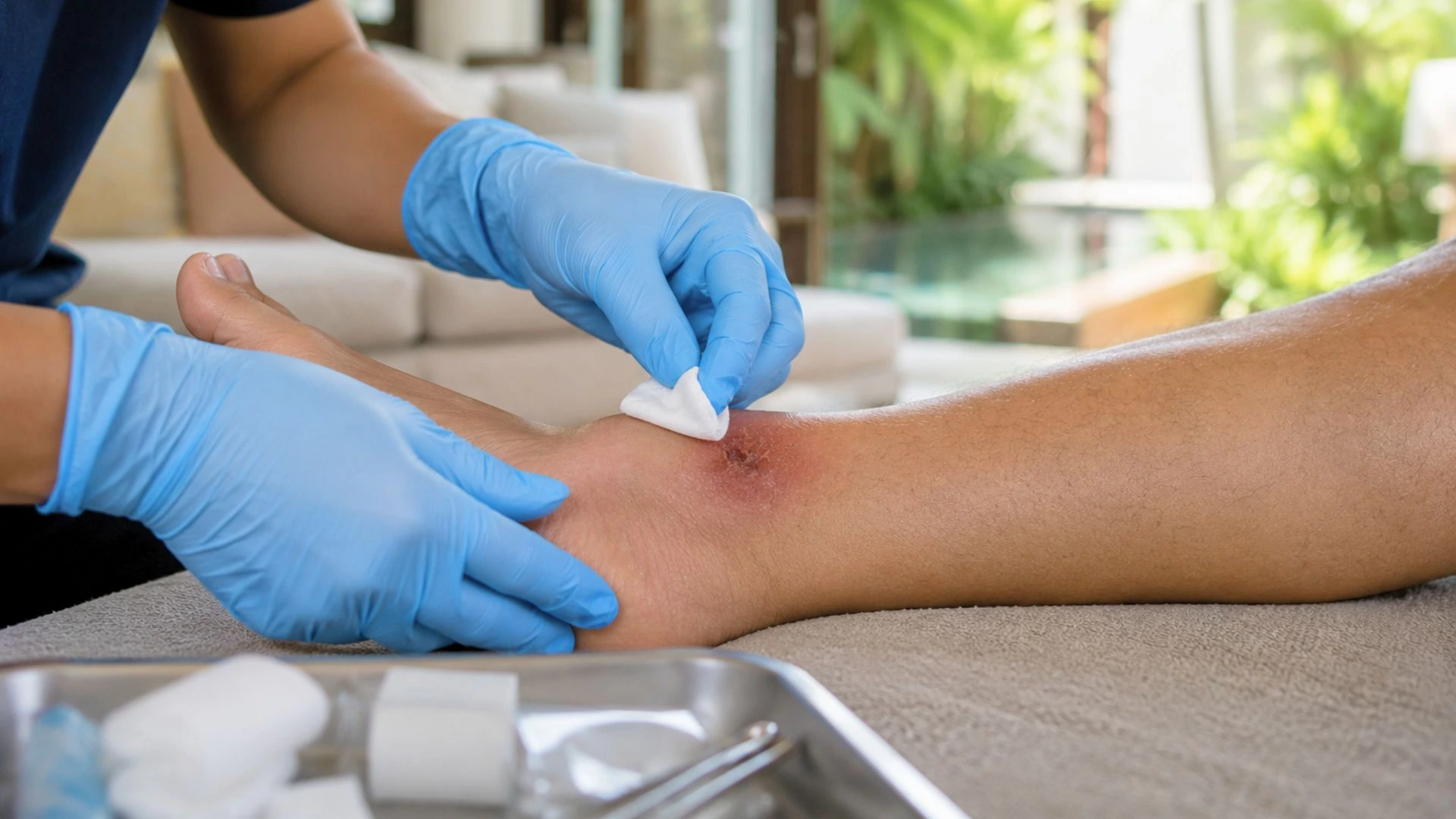
Cuts and Injuries in Bali: First Aid, Infection Risk, and When to See a Doctor

Minor cuts and injuries are among the most common reasons travelers in Bali end up seeking medical attention. A coral graze at Uluwatu, a motorbike scrape on a Canggu road, or a slip near a villa pool: small wounds have a way of happening at inconvenient moments.
In a tropical environment like Bali, even a minor cut can become infected faster than most travelers expect. Knowing how to respond in the first few minutes makes a real difference to how quickly and cleanly you recover.
Why Bali's Environment Increases Infection Risk
In temperate climates, a small cut might barely require attention. In Bali's tropical conditions, the same wound carries a meaningfully higher risk of infection. Bacteria thrive in warm, humid environments, and the island's beaches, waterways, and soil host microorganisms that most travelers have no immunity to.
Coral cuts deserve particular attention. Coral is not simply a sharp rock. It is a living organism, and cuts from coral introduce fragments of organic matter directly into the wound. These fragments are difficult to see and remove. If left in place, they cause persistent inflammation, delayed healing, and a significantly elevated risk of infection.
Wounds exposed to seawater, sand, or soil carry a higher bacterial load than wounds sustained in a clean indoor environment. Careful wound care from the outset is not overcautious. It is the appropriate response to a genuinely elevated risk environment.
Basic First Aid for Cuts and Wounds
Step 1: Clean the wound immediately. Rinse the cut under clean running water for several minutes to flush out debris, bacteria, and organic material. Do not use seawater for this step. If the wound occurred in the ocean or on a reef, rinse with clean fresh water as soon as possible. Wash your hands before touching the wound.
Step 2: Control the bleeding. Apply a clean cloth or sterile gauze directly to the wound and hold firm, steady pressure. Elevating the injured limb above heart level helps reduce blood flow to the site. Most minor cuts stop bleeding within five to ten minutes. If bleeding does not slow, do not remove the cloth. Add more material on top and seek medical attention.
Step 3: Apply antiseptic. Once bleeding is controlled and the wound is clean, apply an antiseptic solution such as povidone-iodine or chlorhexidine. Antiseptic wipes are a practical option to carry in a travel first aid kit. Avoid applying alcohol directly to an open wound, as it damages tissue and slows healing.
Step 4: Cover and protect the wound. Use a sterile adhesive dressing or bandage to keep the wound clean. Change the dressing daily, or immediately if it becomes wet or soaked through. Keeping the wound properly covered promotes healing. Leaving it open and dry slows it.
Step 5: Monitor for signs of infection. Check the wound daily. Watch for redness spreading beyond the wound edges, increasing warmth or swelling, pain that worsens rather than improves, and any discharge or pus. Fever alongside a wound is a sign that infection may have entered the bloodstream. This requires urgent medical attention.
Tetanus: Worth Checking Before You Travel
Tetanus is a serious bacterial infection that enters the body through skin wounds, particularly deep puncture wounds, cuts from dirty or rusty objects, and injuries contaminated with soil or animal material.
Before traveling, confirm that your tetanus vaccination is up to date. Most adults need a booster every ten years. If you sustain a deep or contaminated wound in Bali and your vaccination status is uncertain, a doctor can assess whether a booster is needed as part of your wound treatment.
When to See a Doctor
Many small cuts can be managed with proper first aid at home. The following situations require professional medical assessment.
See a doctor if the wound is deep or will not stay closed. Gaping wounds usually require suturing. Attempting to close them with adhesive strips alone is often insufficient and increases infection risk.
See a doctor if bleeding does not stop after fifteen minutes of firm, continuous pressure. This may indicate a vessel is involved.
See a doctor after any animal bite or scratch. Bali has a documented rabies risk in its animal population, particularly among dogs and monkeys. Post-exposure assessment is important regardless of how minor the bite appears.
See a doctor if signs of infection are spreading or worsening. In a tropical environment, infections that are not treated promptly can escalate quickly. Do not wait to see if it improves on its own.
See a doctor for wounds on the face, hands, or feet, or any injury that affects movement, sensation, or grip. These areas carry a higher risk of deeper tissue or nerve involvement that needs professional evaluation.
Medical Treatment Available in Bali
A doctor can properly assess wound depth, remove embedded debris that is difficult to see with the naked eye, suture wounds that require closure, prescribe antibiotics where infection is confirmed or at high risk, and administer a tetanus booster if indicated.
Bali Doctor provides clinic consultations and on call home visits across the island. If your injury has left you unable to travel comfortably, a doctor can come directly to your villa or hotel to assess and treat the wound on site. This service is available seven days a week across Bali's main tourist and residential areas.
👉 Contact Bali Doctor via WhatsApp to book a consultation at the clinic or arrange a doctor home visit.
Simple Prevention Measures
Wearing appropriate footwear is the single most effective way to reduce injury risk in Bali. Reef sandals or closed shoes protect against coral, sharp rocks, broken glass, and hot surfaces. Avoid walking barefoot on beaches, near reefs, or in any area with debris.
When riding a motorbike or scooter, wear a helmet and cover exposed skin. Road rash from even a low-speed fall is one of the most frequently seen injuries at clinics across Bali. It typically involves significant skin abrasion that is difficult to clean and carries a high infection risk.
Carrying a small travel first aid kit with sterile dressings, antiseptic solution, and adhesive bandages means you can respond immediately to a minor wound before reaching a pharmacy or clinic.